Side A · Liner notes
Artificial Neurons: A Step Toward Energy-Efficient AI Through Biological Mimicry
Nutrition · Words by Edd Gent · Released
Researchers have developed artificial neurons that can replicate biological signaling in living brain tissues, potentially enhancing AI energy efficiency.
Introduction to Artificial Neurons
Advancements in technology are pushing the boundaries of artificial intelligence (AI), but increasing energy demands pose significant challenges. To address this, researchers are looking to the human brain for inspiration. A recent breakthrough from Northwestern University involves artificial neurons that not only replicate biological signaling but also successfully stimulate living brain tissue in mouse models, marking a significant step forward in neuromorphic technology.

Current Landscape of AI and Neuromorphic Computing
As AI systems evolve, they've begun to require massive amounts of energy, raising concerns about sustainability. Traditional neuromorphic chips—devices designed to mimic the brain's architecture—often lack the complexity and efficiency of biological neurons. Many of these chips rely on uniform spiking behavior among their artificial neurons, which limits their dynamic capabilities. Consequently, considerable numbers of these neurons are necessary to achieve even basic functions, substantially increasing energy consumption.
Novel Fabrication Techniques
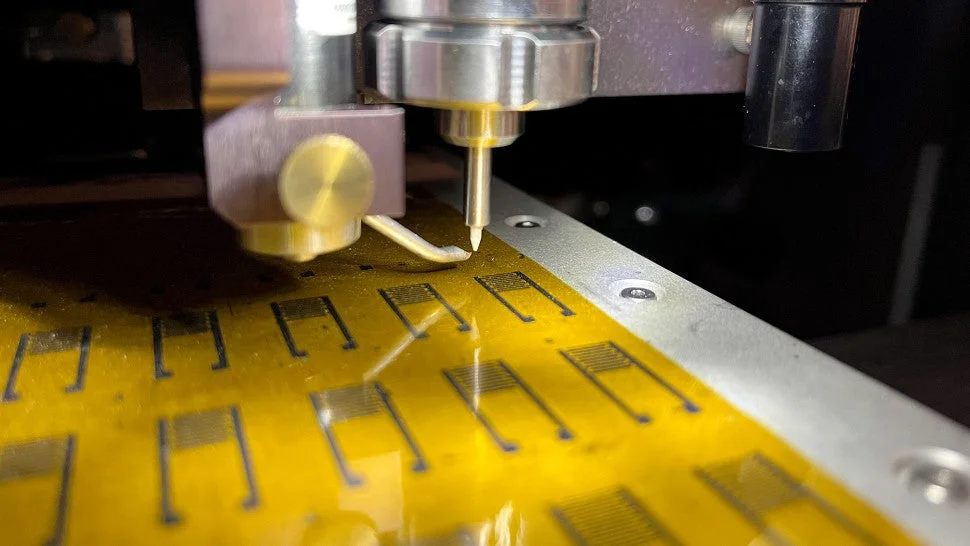
The Northwestern University team employed an innovative fabrication technique to create artificial neurons capable of mimicking the diverse spiking patterns characteristic of real neurons. Their approach involved jet printing electronic inks onto flexible polymers, integrating nanoscale flakes of molybdenum disulfide and graphene. Molybdenum disulfide acts as a semiconductor, while graphene serves as a conductor, enabling efficient electrical signaling.
Instead of entirely burning off the stabilizing polymer that typically interferes with electrical flow, the researchers discovered that leaving some of it intact introduced purposeful imperfections. This strategy facilitated the creation of a more complex signaling structure, with the electrical flow becoming constrained in specific patterns that mimic natural neuron activity.
Signaling Patterns and Functionality
The resulting artificial neurons exhibited an impressive ability to generate a variety of spiking patterns. Unlike traditional devices, which generally produce simple on-off signals, these artificial neurons can sustain bursts of activity, isolated spikes, and even rhythmic firing. The researchers demonstrated that they could tune the spike length and frequency to match biological action potentials, opening possibilities for applications in bioelectronic medicine and brain-computer interfaces.
Interactions with Biological Neurons
Collaboration with neurobiology experts enabled the team to rigorously test their artificial neurons’ capabilities. By connecting their device to slices of mouse cerebellum, they were able to trigger responses from living neurons, demonstrating that their synthetic signals could effectively activate real neural circuits. As Mark Hersam, co-lead of the project, noted, “We’ve demonstrated signals that are not only the right timescale but also the right spike shape to interact directly with living neurons.” This finding underscores the potential for translating these developments into practical uses.
The Implications for AI Efficiency
While the promise of this technology is exciting, it's crucial to remain grounded about the timeline for its widespread implementation. According to Hersam, the ongoing energy demands of AI have led tech companies to rely on extensive data centers, often powered by dedicated nuclear plants. There's a limit to how far this can scale in terms of power and cooling efficiency. The capability to develop more energy-efficient hardware for AI applications grows ever more critical.
In exploring the generational shift from lab prototypes to functional products, it remains likely that breakthroughs in using artificial neurons will take time to materialize. The path to broad adoption in commercial applications is long and fraught with challenges. However, this research lays essential groundwork for architects of future computational technologies that harness the efficiency and adaptability of biological systems.
Future Directions
Continued exploration in this field could lead to a new paradigm in how we design intelligent systems. Future research may focus on refining these artificial neurons, enhancing their integration with organic tissue, and exploring new materials that could further improve their performance. The intersection of biology and technology holds vast potential, encouraging innovative approaches to complex problems, such as AI’s substantial energy needs.
As researchers make strides in bio-inspired technology, it becomes clear that the quest for energy-efficient AI is not just about developing new hardware. It's about creating smarter systems that can potentially revolutionize how we compute, interact with technology, and leverage artificial intelligence in sustainable ways.
The developments from Northwestern University represent a promising step in this direction and pave the way for future investigations into the symbiotic relationship between biological and artificial systems.


