Side A · Liner notes
New Retinal Implant Brings Hope for Restoring Sight in Patients with Severe Vision Loss
Nutrition · Words by Edd Gent · Released
A new retinal implant, approved in Europe, offers potential sight restoration for people with severe vision loss, though it has limitations and requires adjustment.
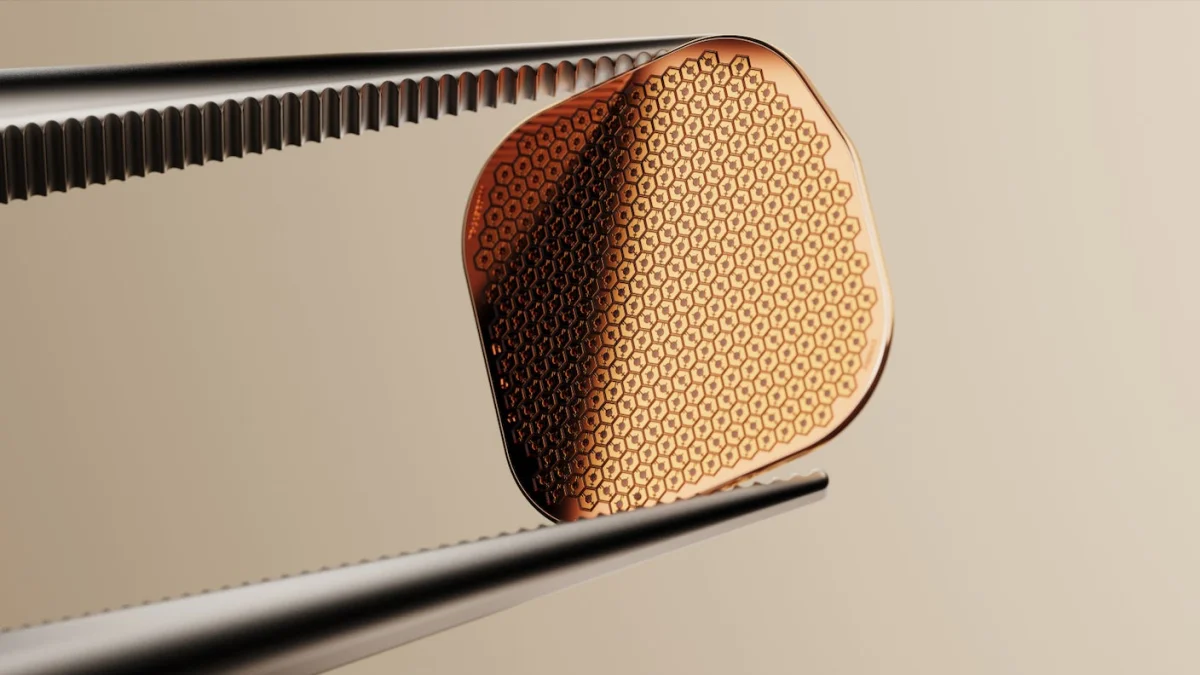
The recent approval of an innovative retinal implant is a significant development for individuals experiencing severe vision loss due to age-related macular degeneration (AMD). This condition, affecting over five million people globally, leads to the deterioration of central vision, making it difficult to perform daily tasks such as reading or recognizing faces.
The newly developed device, known as the PRIMA system, involves a retinal implant that is smaller than a grain of rice, paired with special camera-mounted glasses. These glasses translate visual input into near-infrared light, which the implant then converts into electrical signals that activate surviving retinal cells—specifically bipolar cells. This process aims to restore some degree of functional sight, even in the absence of healthy photoreceptors, which are typically damaged in advanced stages of AMD.
Understanding Age-Related Macular Degeneration
Dry AMD progresses through several stages, with geographic atrophy representing the final phase. This stage is characterized by irreversible damage to the macula, which is essential for high-resolution vision. Current treatments are limited to injections of specific drugs aimed at slowing the progressive decline of vision but do not reverse existing damage. The introduction of the PRIMA implant presents a potential shift in treatment paradigms by possibly allowing for improved vision instead of merely staving off blindness.
The Clinical Trials and Results
A pivotal clinical study involving 38 participants from five countries has provided early evidence of the PRIMA system's efficacy. Results published in the New England Journal of Medicine indicated that patients who received the implant gained an average of 25.5 letters on a standard eye chart—equating to more than five additional lines. This promising outcome suggests that individuals may regain the ability to perform tasks requiring central vision, an area where traditional treatments have fallen short.
Device Limitations and Practical Implications
While the initial results are encouraging, it's important to approach expectations with caution. The images produced by the implant are black and white, and the field of vision is notably narrow, described by CEO Max Hodak as akin to "looking through a straw." This highlights that while some vision can be restored, it does not equate to normal sight. Furthermore, the adaptation process requires significant training and time, indicating that users will need to commit to learning how to interpret the visual information provided by the device effectively.
Market Introduction and Future Outlook
The PRIMA system has recently received a CE mark, allowing it to be marketed across 30 European countries, with the first commercial installations expected imminently in Germany. Other countries, including Italy, the Netherlands, and the UK, are anticipated to follow suit. In the United States, the device is currently recognized with Breakthrough and Humanitarian Use Device designations by the FDA, and there is optimism for full approval in the near future.
This advancement is also expected to bolster the neurotechnology sector, which has seen substantial investments in recent years amidst a need for tangible returns on innovation. Jacob Robinson, founder of Motif Neuroscience, expressed that this development illustrates a pathway toward real revenue for companies working within this field, which may have been perceived as speculative until now.
Looking Ahead
As the PRIMA system achieves market access, the broader implications for neurotechnology could be substantial. Hodak mentioned that revenue generated from sales of the PRIMA device could support further research into “biohybrid” interfaces—an advanced concept linking living neurons to technological devices in more sophisticated ways. Additionally, competition is intensifying with other firms, like Neuralink, advancing their own vision-related technologies aimed at human trials.
While the PRIMA implant isn't close to realizing the full potential of seamless interaction between humans and machines, its approval signals a meaningful step forward for the sector, moving beyond laboratory research into public accessibility. Ongoing developments in this area warrant close observation, as they may eventually provide more comprehensive treatment options for vision loss down the line, offering hope not just for AMD patients but for vision restoration technologies as a whole.


