Side A · Liner notes
Understanding the Shift in Cycling Performance Metrics: Beyond Watts per Kilo
Nutrition · Words by William Jones · Released
While watts per kilo is a common cycling performance metric, understanding watts per CdA might provide a clearer picture of speed, especially in flat races.
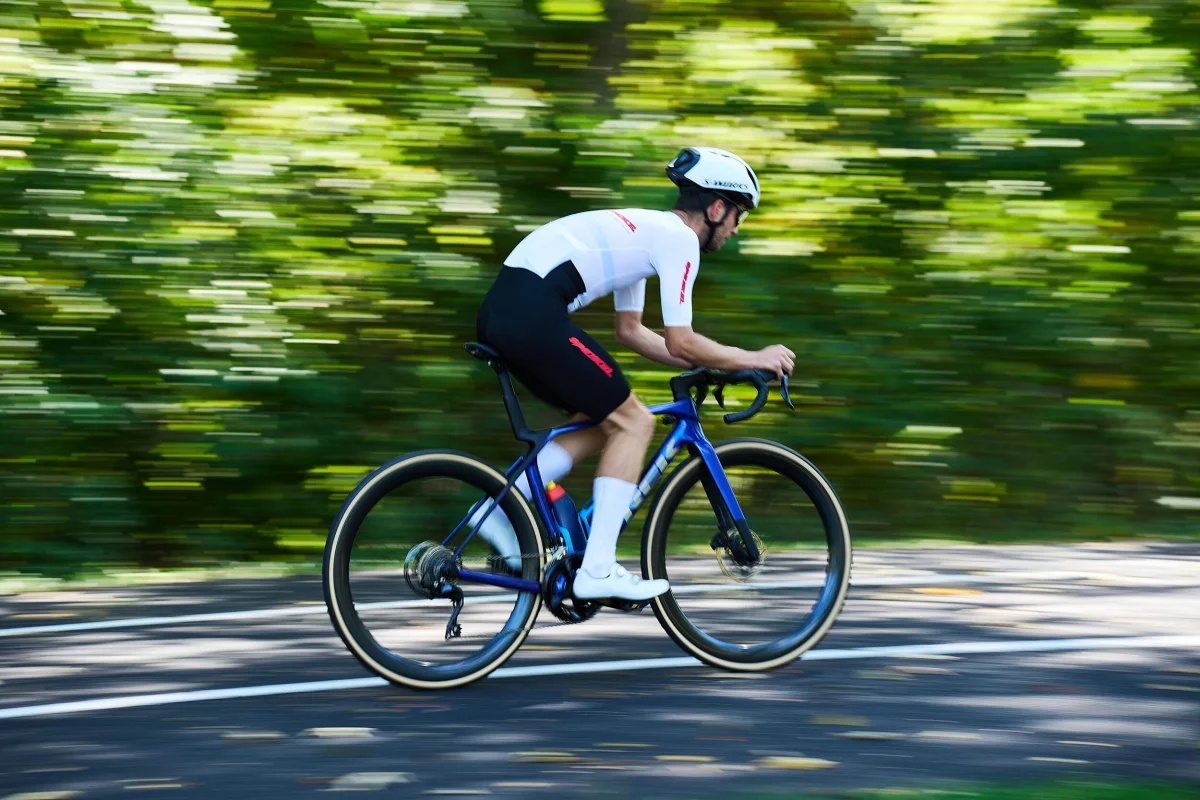
For many cycling enthusiasts and professionals, watts per kilo has long been an essential performance metric, particularly when tackling climbs. This measure simplifies the comparison of riders, allowing fans and team strategists to evaluate who may have the power-to-weight advantage on mountainous terrain. However, this metric can overlook crucial factors influencing rider speed, especially on flatter courses where aerodynamic considerations take precedence.

The Importance of Aerodynamics
As riders hit typical road speeds on flat ground, the resistance they face from air becomes increasingly significant. When two cyclists produce the same watts per kilo—or even similar absolute power outputs—they may still achieve different speeds due to variations in their aerodynamic profiles. This is where watts per CdA (Coefficient of Drag Area) enters the conversation.
Watts per CdA effectively represents the relationship between a cyclist's power output and their aerodynamic drag, which is shaped by both their position on the bike and the bike’s geometry. When you calculate watts divided by CdA, you receive a metric that indicates how much power is being exerted relative to drag. A higher value in this metric can indicate greater speed achieved with the same power output, making it particularly useful in time trials and flat races. It refines the evaluation by emphasizing the efficiency of how power translates into performance in different racing scenarios.
Challenges of Measuring CdA
Despite its advantages, watts per CdA isn't a metric that's easily accessible to most riders. While advancements in technology, such as Wahoo's Ace bike computer launched in 2024, have opened doors for potential drag measurement, live CdA calculations have yet to be fully realized within consumer equipment. The systems available today tend to be complex and not widely adopted, limiting the broader cycling community's ability to utilize this data for performance enhancement.
Understanding CdA also requires more than just a number; it entails considering the array of variables that can influence aerodynamics. Each cyclist’s riding position, clothing choice, and even conditions like wind direction can substantially affect drag. Additional complexities arise when riding in different environments, such as solo versus in a group, which alters the effective wind resistance faced by riders. Therefore, optimizing performance often extends beyond mere calculations and requires practical adjustments in practice.
Field Testing and Real-World Applications
Even without sophisticated sensors, cyclists can improve understanding of their aerodynamic efficiency through repeatable field tests. By riding at constant power outputs while experimenting with different configurations—like changing helmets, jerseys, or handlebar heights—cyclists may ascertain how specific factors affect speed. These empirical results can lead to practical insights for riders seeking to reduce their aerodynamic drag without waiting for advanced technology to become mainstream.
The Modern Peloton: Speed and Strategy
Over the past few years, cycling races have seen a notable uptick in speed, driven by advancements in aerodynamic understanding and implementation. The modern peloton has adapted to become far more efficient, leading to dramatic changes in race dynamics. Riders today are more adept at using their aerodynamics to maintain speed, making it increasingly difficult for would-be pursuers to close gaps established by breakaways.
For instance, consider two identical breakaway groups separated by a 20-second gap at different speeds. At 40 kph, the gap might be about 222 meters, requiring a chasing group at 45 kph around 2 minutes and 40 seconds to close it. When the speed increases to 50 kph, that same gap extends to 278 meters, pushing the closing time to over three minutes. Notably, as speed increases, the power required grows disproportionately due to how aerodynamic drag scales with speed. This means maintaining pace for a chase group becomes significantly harder.
The Future of Performance Metrics
As cyclic performance metrics evolve, watts per CdA might potentially overshadow watts per kilo as the primary measure in professional racing, especially as access to drag data improves. For performance-oriented cyclists—regardless of the level of competition—gaining insights into one’s aerodynamic profile can offer a competitive edge, illuminating how speed can be optimized through efficiency rather than sheer power expansion.
Ultimately, while watts per kilo remains a valuable measure for assessing climbing performance, understanding watts per CdA provides a fuller picture of cycling dynamics, particularly for time trials and flat racing. Engaging with this knowledge could lead to meaningful improvements in race strategy and individual performance.


