Side A · Liner notes
US Department of Energy Launches $215 Million Competition for Fault-Tolerant Quantum Computers by 2028
Nutrition · Words by Edd Gent · Released
The Department of Energy has initiated a $215 million contest aiming to accelerate the development of fault-tolerant quantum computers, targeting practical scientific applications by 2028.
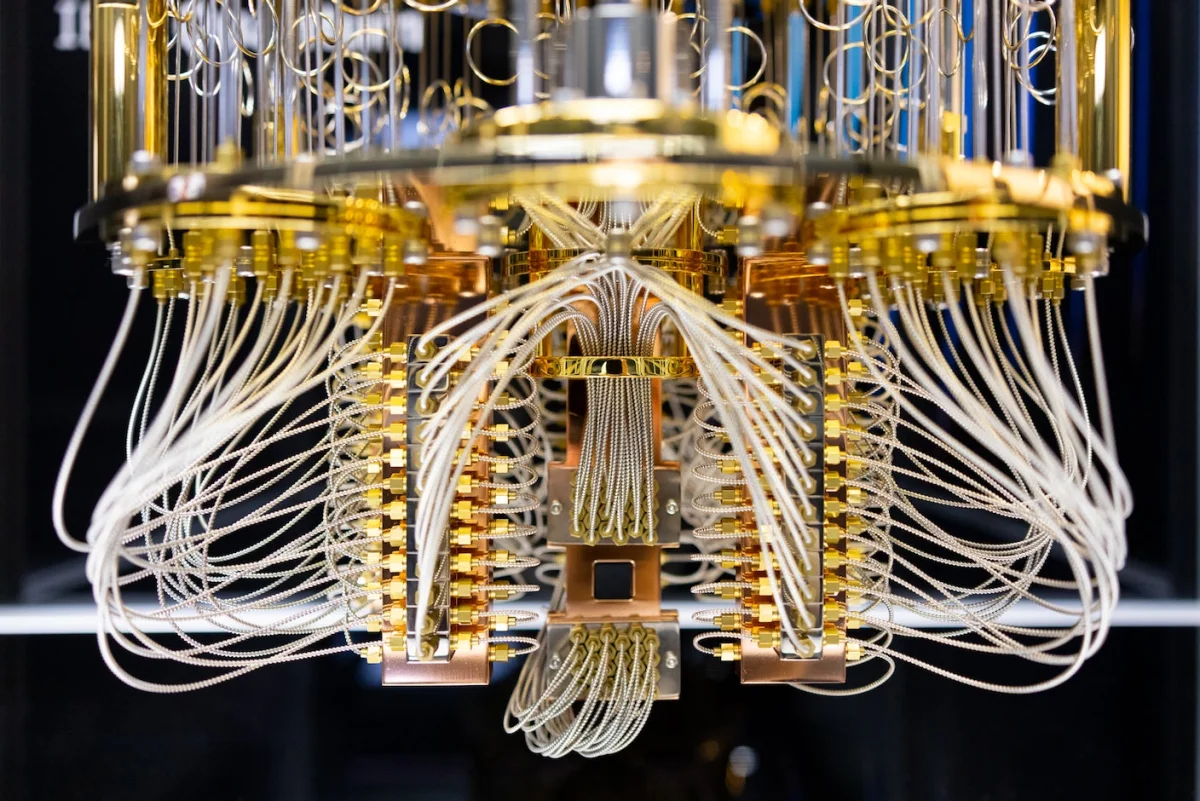
The U.S. Department of Energy (DOE) is setting its sights on an ambitious goal: to foster the creation of fault-tolerant quantum computers capable of solving complex scientific problems that traditional supercomputers struggle with. In a bold move, the DOE has announced the Quantum Genesis Q Competition, featuring a prize pool of $215 million, designed to incentivize teams to build quantum machines that can effectively perform significant calculations by the year 2028.
Quantum computing is a field that holds immense potential, promising breakthroughs in areas such as chemistry, materials science, and physics. However, current quantum computers face a critical limitation—high error rates due to the fragile nature of qubits, the building blocks of quantum systems. These machines are not yet reliable enough to tackle work with the scientific importance that the DOE aims for, often relegating them to solving simplified, less meaningful problems.
The competition reflects a growing consensus among scientists and engineers: substantial advancements in quantum computing are necessary to achieve practical applications. A pivotal aspect of the challenge is the development of fault-tolerant quantum computers. To overcome the inherent errors in qubit systems, error-correction techniques must be employed, often resulting in the need for many more qubits than could be practically handled until now.
Incentives and Goals of the Competition
With a prize package totaling $215 million, the Quantum Genesis Q Competition is structured in phases to motivate participants at various stages of development. Initially, applicants can earn grants of up to $1.5 million for achieving undisclosed early milestones. However, the major financial rewards will come into play during the second phase, where teams demonstrating a functioning first-generation quantum computer with at least 100 logical qubits stand to share $100 million. There are additional bonus incentives of $50 million for reaching 150 and 200 logical qubits, respectively.
“This competition will enable new quantum computing capabilities and unleash new computational frontiers,” remarked Darío Gil, the DOE’s under secretary for science, emphasizing the critical need for innovation in this area. His vision was first shared in March during a meeting with the agency’s Office of Science Advisory Committee, indicating a partnership between government and industry towards achieving fault tolerance within an aggressive three-year timeline.
Verification and Testing Framework
To ensure that the competitors meet their goals, the DOE is putting in place a $45 million fund aimed at developing testbeds in national laboratories. These facilities will validate the performance of quantum systems across all levels—from hardware configurations to operational algorithms. Tanner Crowder, the quantum information science lead at the DOE, underscored that simply having qubits without the ability to perform meaningful calculations is not the objective; the competition aims to deliver functioning machines that produce beneficial scientific results.
The challenge is significant, considering that fault tolerance typically necessitates a dramatic increase in qubit numbers—often an order of magnitude higher than current capabilities. Most industry experts view the 2028 deadline as highly ambitious, given that scaling quantum systems is a complex endeavor.
Private Investment and Future Outlook
While the competition could stimulate progress, questions remain about the impact of this government initiative on the already active private sector. With billions having been invested in quantum technologies by commercial entities, the appeal of an additional $100 million may not significantly alter development strategies. Moreover, only a small fraction of the overall funding—$2.5 million—has been secured in the current budget, with the remaining funds contingent on congressional approval in upcoming years.
Despite these challenges, the Quantum Genesis Q Competition could play a crucial role in fostering collaboration and establishing shared objectives within the quantum computing community. As researchers and industry players strive to meet the outlined targets, there exists a renewed sense of purpose that may encourage a collective movement towards overcoming technological hurdles.
Whether any team will meet the proposed deadlines remains uncertain, but the competition's clear benchmark and generous prize structure certainly introduce a compelling incentive for advancement. As the deadline approaches, the landscape of quantum computing may evolve significantly, potentially unlocking previously unimaginable scientific capabilities.


