Side A · Liner notes
Exploring the Neural Advantages of Clarity Boost AI in Hearing Aids
Nutrition · Words by Melanie Hamilton · Released
Research indicates that the Clarity Boost AI technology in hearing aids enhances speech understanding while reducing listening effort, even in noisy environments.
Understanding the Study's Context
Recent advancements in hearing aids have integrated artificial intelligence (AI) technologies to improve hearing experiences, particularly in noisy environments. A notable study evaluated Widex’s Clarity Boost AI noise-reduction technology, focusing on its capability to maintain natural sound quality while facilitating better speech understanding. This research highlights that a successful hearing aid experience involves not just recognizing speech accurately but also considering how easily and comfortably individuals can follow conversations amidst background noise.
The Role of Natural Sound Quality
Traditional AI-based noise reduction typically employs deep neural networks (DNNs) trained to enhance speech clarity by minimizing background noise. However, these systems can inadvertently distort sound characteristics, which might complicate the listening experience by necessitating increased cognitive effort for users to comprehend speech. This phenomenon can lead to fatigue and decreased satisfaction after social interactions—a relevant concern emphasized by previous studies.
Widex has a longstanding commitment to natural sound processing, aiming to preserve the acoustic qualities that the brain relies on for effective communication. For example, recent findings have shown that natural sound processing alone can outperform conventional DNN noise reduction in speech intelligibility under various conditions. This philosophy underpins the design of Clarity Boost, which utilizes a Large Audio Foundation Model (LAM) trained on diverse audio samples. The goal is to reduce noise while allowing the inherent qualities of sound to remain intact, thereby easing mental load during listening.
Study Overview
The pivotal study by Slugocki et al. (2026a) compared the Clarity Boost program with the default Widex Universal program under various signal-to-noise ratio (SNR) conditions. Findings concluded that Clarity Boost not only improved speech understanding in difficult listening environments (where comprehension was lower) but also enhanced listening comfort and reduced effort, even when intelligibility was already high (≥ 90%). This nuanced outcome significantly reflects the everyday communication scenarios prevalent in real-world conditions.
Investigating Neural Responses with EEG
To delve deeper into the mechanisms behind these findings, the current study employed electroencephalography (EEG) to monitor brain activity while participants engaged in speech-in-noise (SiN) comprehension tasks. The focus was on alpha-band oscillatory activity (7–14 Hz), a neural marker indicative of listening effort and cognitive load. Higher alpha power is typically associated with greater difficulty in listening tasks, making it a valuable metric for understanding the impact of different hearing aid technologies.
Participant Demographics
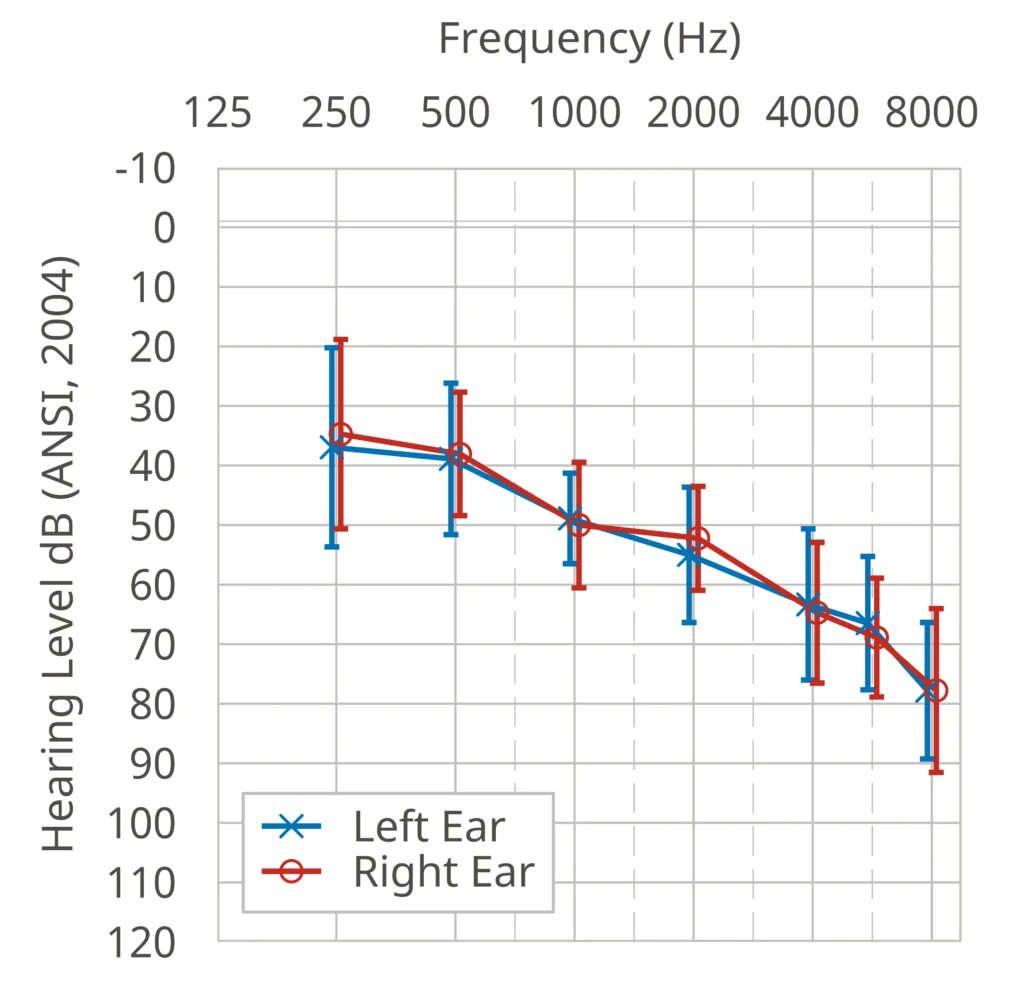
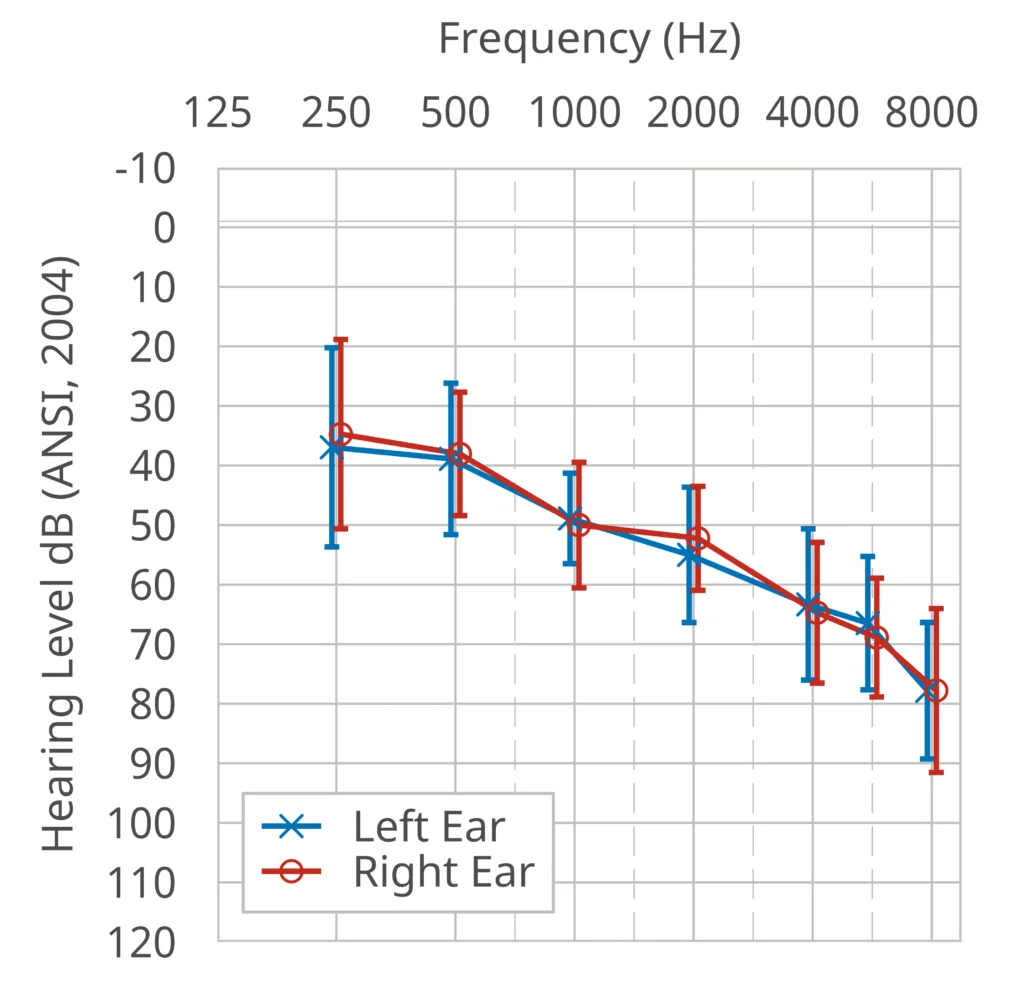
The experiment involved 18 older adults with moderate-to-severe symmetrical sensorineural hearing loss, averaging 73.2 years in age. All participants were either current or experienced users of hearing aids, ensuring they were accustomed to the demands of SiN tasks. The study specifically targeted a demographic known for experiencing significant listening challenges, which adds relevance to the applicability of the findings.
Hearing Aid Configuration
Participants were fitted with Widex Allure AI receiver-in-canal (RIC) hearing aids tailored to their individual hearing loss profiles. This personalized configuration was guided by the company’s fitting software, ensuring that the devices operated at an optimal gain level. The study aimed to create a standard testing environment to evaluate how each hearing aid program influenced listening experiences.
Testing Methodology
The study comprised a two-phase testing procedure. Initially, a Bayesian-guided adaptive protocol assessed individual SNRs for each participant to establish levels of speech reception threshold (SRT) for 50% (SRT50) and 90% intelligibility (SRT90). In the subsequent phase, fixed SNRs targeted these performance levels while EEG was recorded to measure alpha-band power during SiN tasks. This structured approach facilitated a comprehensive understanding of how hearing aid processing impacts both acoustic discernment and cognitive responses.
Key Findings and Behavioral Insights
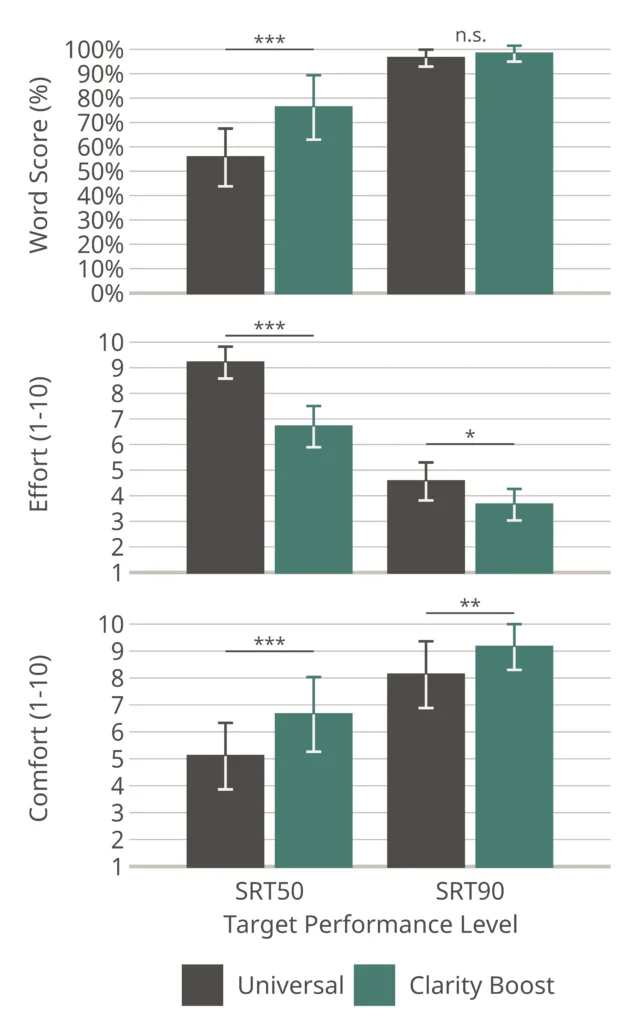
Results showed that under challenging listening conditions (SRT50), participants demonstrated significantly improved performance in identifying speech with the Clarity Boost program, with an increase of 20.5% in correct word recognition compared to the Universal program. Additionally, participants expressed lower listening effort and greater comfort while using Clarity Boost, reaffirming the subjective benefits highlighted in earlier behavioral studies.
Conversely, at the SRT90 level, while no difference in intelligibility between the hearing aid programs was documented, the subjective evaluations still favored Clarity Boost for easier and more comfortable listening experiences. This discrepancy suggests that natural sound processing improves subjective ease of use even when participants perform similarly well in recognizing speech.
EEG Analysis Outcomes
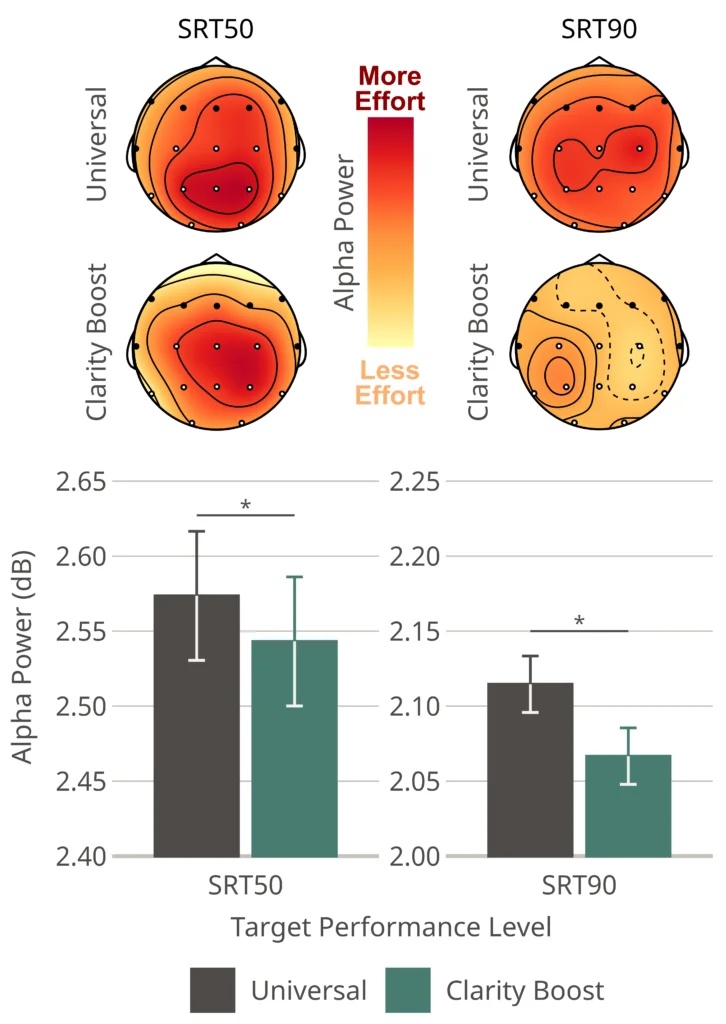
EEG results echoed the behavioral observations, with alpha-band activity significantly lower when participants used the Clarity Boost program, both in challenging SRT50 conditions and the easier SRT90 contexts. These findings indicate that the DNN-based processing strategies of Clarity Boost effectively minimize the neural markers of cognitive effort associated with listening tasks.
Discussion: Implications for Hearing Aid Design
Collectively, the data suggests that enhancing natural sound quality through AI-driven processing results in tangible benefits for users, both in terms of performance and subjective experience. By lowering cognitive demand and improving comfort, hearing aids like those featuring Clarity Boost can foster better communication, especially for older adults facing the dual challenges of hearing loss and social engagement.
Furthermore, the outcome emphasizes the need for evaluating hearing technologies through diverse lenses, integrating metrics beyond mere speech intelligibility. Assessing listening effort, comfort, and brain activity provides a richer understanding of how hearing aids can transform the listening experience, particularly in real-world scenarios loaded with auditory complexities.
Conclusion
The study reaffirms the potential for AI-enhanced hearing devices to significantly improve user experience by both maintaining sound fidelity and reducing cognitive load. It highlights the importance of considering neural and subjective impacts alongside traditional metrics of speech understanding to fully grasp how modern hearing aid technologies can meet users' needs. Progressing towards designs that align with natural acoustics may facilitate more comfortable interactions and enhance the overall quality of life for those with hearing impairment.
References
Bianchi, F., Oestergaard, M., & Nielsen, J. B. (2026). Introducing 3rd generation audio-specific AI: Expressive. Efficient. Engineered for Optimal Balance. WidexPress 60.
Dimitrijevic, A., Smith, M. L., Kadis, D. S., & Moore, D. R. (2019). Neural indices of listening effort in noisy environments. Scientific Reports, 9(1), 1–10.
Kiliç, S., Yiğit, Ö., & Türkyilmaz, M. D. (2022). Listening effort in hearing aid users: is it related to hearing aid use and satisfaction? Journal of the American Academy of Audiology, 33(06), 316–323.
Korhonen, P., Kuk, F., & Slugocki, C. (2026). Comparing Widex Allure with four DNN-based hearing aids on speech in noise performance. WidexPress 59.
Kuk, F., Slugocki, C., & Korhonen, P. (2024). Subjective speech intelligibility drives noise-tolerance domain use during the Tracking of Noise-Tolerance test. Ear and Hearing, 45(6), 1484–1495.
Lelic, D., Picou, E., Shafiro, V., & Lorenzi, C. (2024). Sounds of nature and hearing loss: A call to action. Ear and Hearing, 46(2), 298–304.
Letowski, T. R., & Scharine, A. A. (2017). Correlational analysis of speech intelligibility tests and metrics for speech transmission (No. ARLTR8227).
Mamo, S. K., & Henckel, T. (2022). A holistic approach to addressing post-fitting needs in the short and long term for new hearing aid users. Seminars in Hearing, 43(2), 121–134.
Peelle, J.E. (2018). Listening effort: how the cognitive consequences of acoustic challenge are reflected in brain and behavior. Ear and Hearing, 39(2), 204–214.
Slugocki, C., Kuk, F., & Korhonen P. (2024a). Alpha-band dynamics of hearing aid wearers performing the Repeat-Recall Test (RRT). Trends in Hearing, 28(1), 1–15.
Slugocki, C., Kuk, F., & Korhonen, P. (2024b). Using Alpha-Band Power to Evaluate Hearing Aid Directionality Based on Multistream Architecture. American Journal of Audiology, 33(4), 1164–1175.
Slugocki, C., Kuk, F., & Korhonen, P. (2026a). Widex Allure AI RIC with Clarity Boost: Clarity and Comfort, Naturally Combined. WidexPress 63.
Slugocki, C., Kuk, F., Korhonen, P., & Peeters, H. (2026b). The Intelligibility-based Repeat-Recall Test (i-RRT): I. Bayesian-guided estimation of multiple speech reception thresholds. Ear and Hearing, Advance online publication. https://doi.org/10.1097/aud.0000000000001885
Smeds, K., Wolters, F., & Rung, M. (2015). Estimation of signal-to-noise ratios in realistic sound scenarios. Journal of the American Academy of Audiology, 26(02), 183–196.
Timmer, B. H., Bennett, R. J., Montano, J., Hickson, L., Weinstein, B., Wild, J., … & Dyre, L. (2024). Social-emotional well-being and adult hearing loss: Clinical recommendations. International Journal of Audiology, 63(6), 381–392.


